

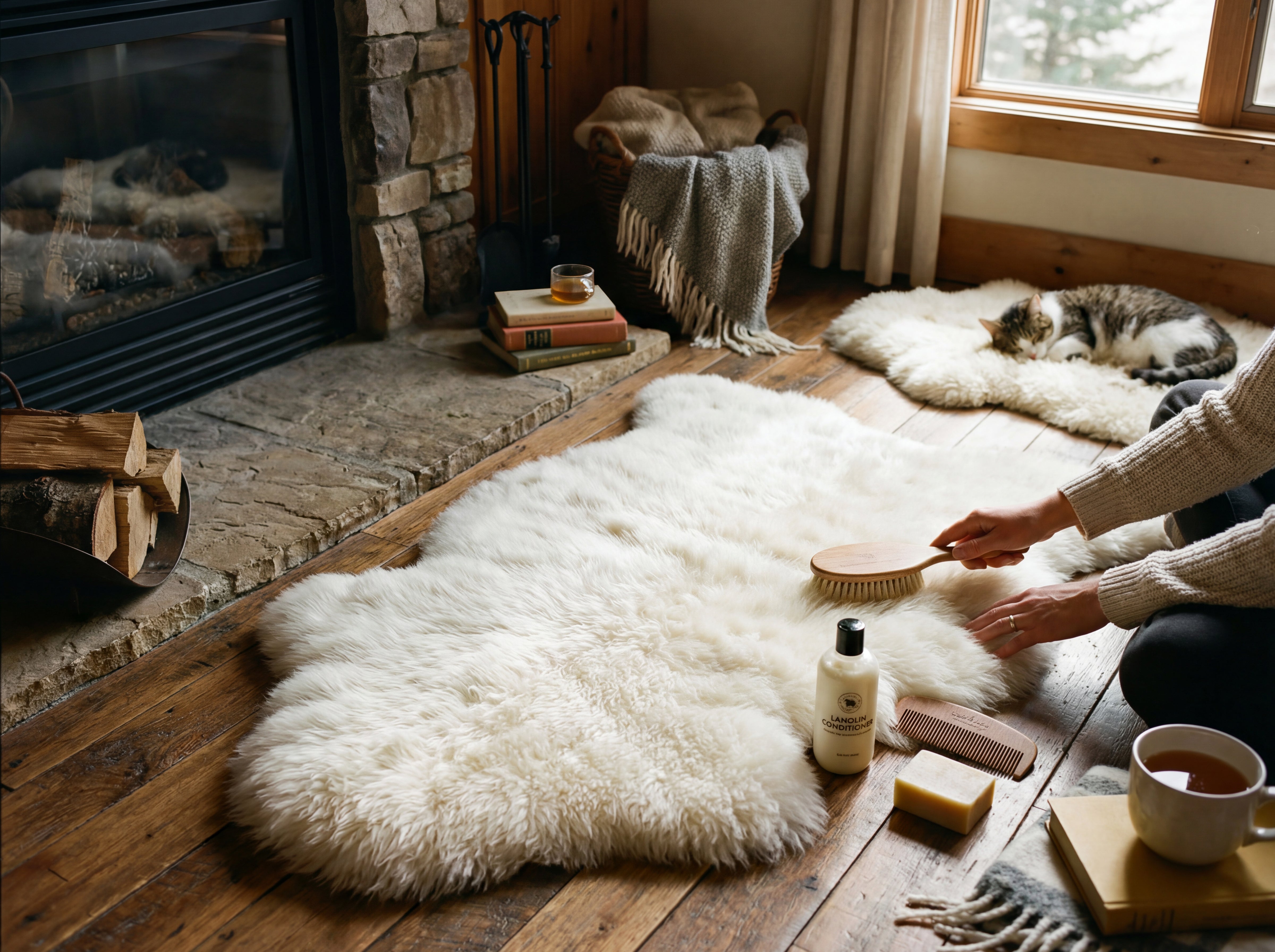
Genuine sheepskin is a natural product, prized for its natural sheen and softness. These natural qualities require gentle care to keep your sheepskin looking beautiful for years to come. To help you keep your sheepskin fluffy and soft, the following blog post offers practical tips and tricks on how to properly care for and clean it.
To understand the principles of proper sheepskin care, it's helpful to first take a closer look at the structure and composition of sheepskin. One of the main components of sheepskin is lanolin. This is a fatty substance that not only keeps the sheepskin soft and shiny but also provides a dirt-repellent and self-cleaning function. Lanolin is therefore very important for the beauty and cleanliness of your sheepskin. With improper care, the lanolin can be unintentionally removed from the sheepskin. The following tips will show you how to clean your sheepskin while preserving the lanolin in the fleece.
cleaning
Dry cleaning: Since sheepskin is a very easy-care material and naturally possesses self-cleaning and dirt-repellent properties, dry cleaning is usually sufficient. We recommend regularly and gently brushing the fur with a soft brush, ideally a special wool and sheepskin brush, to remove dust particles.
Stain removal: No matter how careful we are, sometimes it happens: we spill something on our beloved sheepskin and a stain appears. Don't worry. We'll show you how to gently clean your sheepskin again. To remove stains from your sheepskin, you should carefully dab the fresh stain with a damp cloth. And this is where your knowledge of sheepskin composition comes in handy. As already explained, sheepskin contains the important fatty substance lanolin, which provides natural shine and softness. To keep your sheepskin looking its best, it is therefore important to treat the lanolin in the fleece with care. Conventional cleaning agents are usually formulated in such a way that their grease-dissolving action removes and rinses away the lanolin from the fleece.
To prevent this, you should only use very mild cleaning agents. Special sheepskin cleaners are best, as they usually not only clean the fur very gently but also condition it with added lanolin.
Furthermore, you should be careful not to use hot or too much water, as this could wash the lanolin out of the coat.
ventilation
To avoid unpleasant odors and maintain a fresh scent, we recommend storing your sheepskin in a well-ventilated area. You can also regularly hang your sheepskin outside for a few hours to air it out, but be sure to avoid both direct sunlight and moisture.
moisture
Sheepskins don't like moisture. As we've already learned, the main reason for this is that dampness reduces the important lanolin content in the fleece, causing the sheepskin to lose its glossy, fluffy texture and instead become misshapen and stiff. Therefore, you should definitely find a dry place for your sheepskin.
When caring for and cleaning your sheepskin, it's important to use as little moisture as possible. If using water is unavoidable, for example to remove stains, you should dry your sheepskin as gently and slowly as possible. The best way is to lay your sheepskin on a towel, pull it into shape, and shake it out regularly.When drying, be sure to dry the sheepskin away from direct sunlight or other heat sources. Once dry, you can gently brush your sheepskin with a soft brush to make it soft and fluffy again.
storage
If you're not going to be using your sheepskin for a while, it's important not to simply stuff it into a closet in a plastic bag, but to find a suitable place where its quality is preserved. The location should be as dry and cool as possible. Good ventilation will also ensure that your sheepskin smells fresh when you use it again. Ideally, store your sheepskin in a breathable storage bag. This prevents dirt particles from getting into the fur while still allowing it to breathe.
Care products
To preserve the natural beauty of sheepskins, only special wool and sheepskin cleaners should be used for care and cleaning. These are significantly milder than conventional cleaning agents and thus counteract the leaching of the important lanolin. To not only maintain but also optimally care for the natural sheen and suppleness, sheepskin cleaners often even contain additional lanolin, thus replenishing the natural oils. Therefore, for all those who want to preserve the quality of their sheepskins for as long as possible, we recommend using cleaning products specifically designed for sheepskin.
Professional cleaning
Most people wash their laundry at home in the washing machine. Some sheepskins can also be washed at home in the washing machine under certain conditions, although this involves a bit of effort. From the right detergent and the optimal washing temperature to gentle drying – everything has to be just right so that your sheepskin remains soft and fluffy after washing.
If a wash is absolutely necessary due to heavy soiling, it's worth considering professional cleaning at a laundry. Laundries usually offer a complete service package where you can drop off your soiled sheepskin and pick it up clean and, most importantly, soft a few days later.
Conclusion
The general rule for cleaning and caring for sheepskin is: "Less is more." Sheepskin is a natural product and should therefore be cared for as naturally as possible. The selection of suitable care and cleaning products is particularly important. Special wool and sheepskin cleaners with a natural composition are best. Otherwise, it is important to protect the sheepskin from external influences, such as... z.BTo protect against sunlight, heat and humidity, and to guarantee good ventilation.
If you spill something on the sheepskin, you can remove fresh stains by gently dabbing them with a damp towel. For stubborn, dried stains, a wash in the washing machine may be necessary. If this is the case, it's worth considering professional cleaning.
If you follow the tips mentioned for sheepskin care, your beloved sheepskin should enhance your living space for as long as possible, making it cozy and snug.
Share:
Sheepskin leather hard after washing
How is lambskin produced?