

What is lambskin?
Lambskin is a natural product that, through its centuries-long use, is not only a symbol of tradition, craftsmanship and quality, but has also become an absolute must in many households in recent years. The trend is increasingly shifting towards high-quality, sustainably produced natural products and away from mass-produced items. Lambskin brings its popular qualities directly from nature. Hardly any other natural product combines such an unforgettable cuddling experience with a luxurious sheen as this warm, fluffy wool.
The unique softness and fluffiness of lambskin can be attributed to the fact that the lambs from which the fleece is obtained are generally younger than 12 months old, resulting in particularly fine and dense fibers. This is also the biggest difference to sheepskin, which comes from older sheep. Due to its exceptional softness, lambskin is especially popular as clothing, a decorative element in the home, or as a rug.
Origin and selection of the lambs
While lambskin production was rather pragmatic and simple back then, centuries of experience and a commitment to high quality have made it increasingly efficient and sophisticated today. For example, people have discovered that not every sheep breed produces the same wool quality.
Breeds with a fairly dense and fine wool, such as Merino, Suffolk and Rambouillet, are particularly preferred.
However, not only the breed, but also species-appropriate husbandry and careful care of the lambs have a positive effect on their wool quality and are essential for ethically responsible lambskin production. In times when animal welfare and sustainability are increasingly important, discussions about lambskin production are becoming more frequent. Many lambskin producers therefore now ensure that they only use skins from lambs kept in species-appropriate conditions and skins obtained incidentally during slaughter for meat production.
The production process of lambskin
First steps
For many consumers, it is becoming increasingly important to be informed as transparently as possible about the manufacturing and processing of a product before making a purchase. Since the desired transparency is often still lacking, we provide you with an overview of the production process of lambskins below.
1.1 Slaughter and skinning
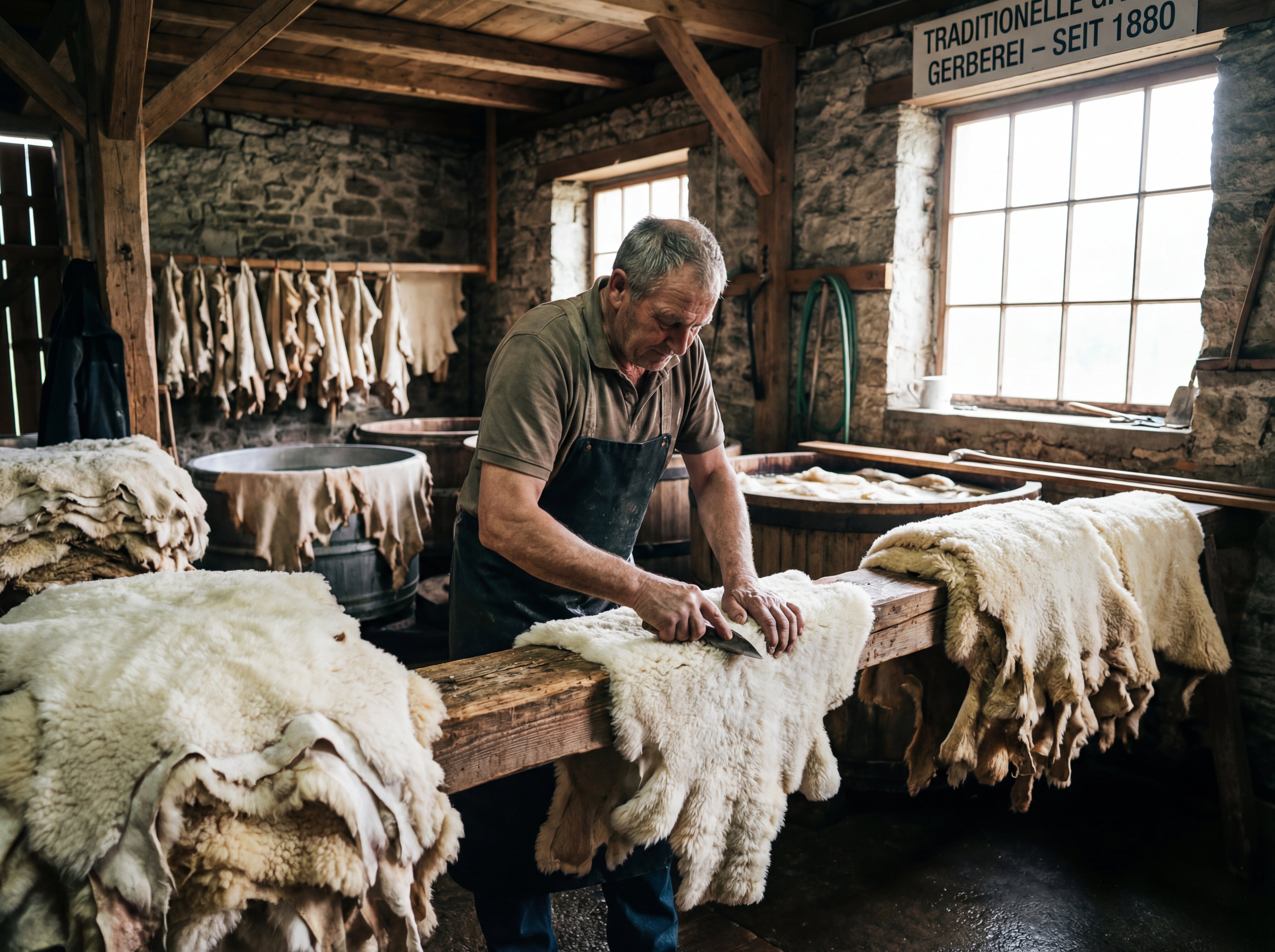
As mentioned previously, lambskin production is a traditional craft that has continuously evolved over the years. Just as it did hundreds of years ago, production still begins with the slaughter and skinning of lambs. Today, there is an animal welfare law that must be strictly observed during slaughter. During the subsequent skinning process, the skin and wool are carefully separated from the meat using a knife cut. To ensure the most sustainable lambskin production possible, every effort is made to utilize all byproducts generated during lambskin slaughter.
1.2. Preservation and preparation of the fur
To prevent the hide from rotting or disintegrating before further processing, it is salted. The preserved hide can then be stored under suitable conditions and transported for further processing.
1.3 Tanning of the lambskin
A particularly important step in the further processing is the tanning of the lambskins, as this influences the quality of the lambskins.Depending on the tanning method, it affects softness, color and durability.
Traditional tanning methods include vegetable and chemical tanning. As the names suggest, vegetable tanning uses only plant-based tanning agents, while chemical tanning uses chemical tanning agents (z.BChromium salts are used. Modern tanning methods usually place particular emphasis on sustainability and environmental friendliness.
Refining and finishing of the lambskin
After tanning, the next steps in lambskin production are refining and finishing, so that at the end of this production stage a simple natural product becomes a high-quality product that should meet the requirements for sale.
2.1 Washing and drying
First, the lambskin is thoroughly washed to remove any tanning residue and then dried. Traditionally, lambskins were almost exclusively air-dried, while modern lambskin production often incorporates machine drying. Although machine drying is significantly faster, it is rarely the preferred method due to the increased risk of the lambskin becoming deformed or stiff. Traditional air drying involves gently drying the lambskin without heat and regularly fluffing it to ensure that the fine lambskin fibers remain soft and cuddly.
2.2 Shearing and shortening
Once the fleece is completely dry, the finishing work begins. Because lambskins are of natural origin and the length of the wool fibers can vary considerably, the hides must be sheared to achieve a uniform pile height. The desired pile height naturally depends on the intended use. For example, a longer pile height is usually preferred for carpets, while lambskins for clothing are typically sheared relatively short.
2.3. Coloring and further refinement
Finally, some optional visual and tactile adjustments can be made. For example, the lambskins can be dyed. Whether in natural or synthetic colors - there are no limits to the possibilities.
To support the natural fluffiness and suppleness of the lambskin and to ensure years of durability, softeners and finishes may be used.
Quality control and sorting
3.1. Assessment of coat quality
To ensure complete customer satisfaction, all lambskins undergo thorough quality checks before being sold, with particular emphasis on softness, density, and uniformity. Based on their quality level, the pelts are categorized as high-quality or lower-quality. Many manufacturers offer the lower-quality products at a reduced price, thus maintaining sustainability while ensuring there is a suitable pelt for every budget.
3.2 Packaging and Shipping
If the lambskins meet the quality standards, they can be sold in compliance with the regulations. The specific shipping standards for the end consumer are used. These standards include, for example, special ventilated packaging, Cool, dry storage and the shortest possible transport times.
Environmental and sustainability aspects in lambskin production
Due to the evolving values of our society, more and more people desire sustainable and environmentally friendly products. Manufacturers are aware of this, which is why increasing attention is being paid to compliance in lambskin production as well.
Conclusion
Overall, it can be said that lambskin production manages to combine modern and traditional elements in a very special way. Traditional craftsmanship results in a stylish natural product that meets contemporary quality standards and adheres to modern values such as sustainability and animal welfare in the best possible way. Only in this way can a soft and lustrous lambskin be created that will decorate your home in a cozy and trendy style.
Share:
The best tips for caring for sheepskins
Table furnishing ideas – creative solutions for every room